
Microtopping vs Microcement Flooring — What’s the Difference?
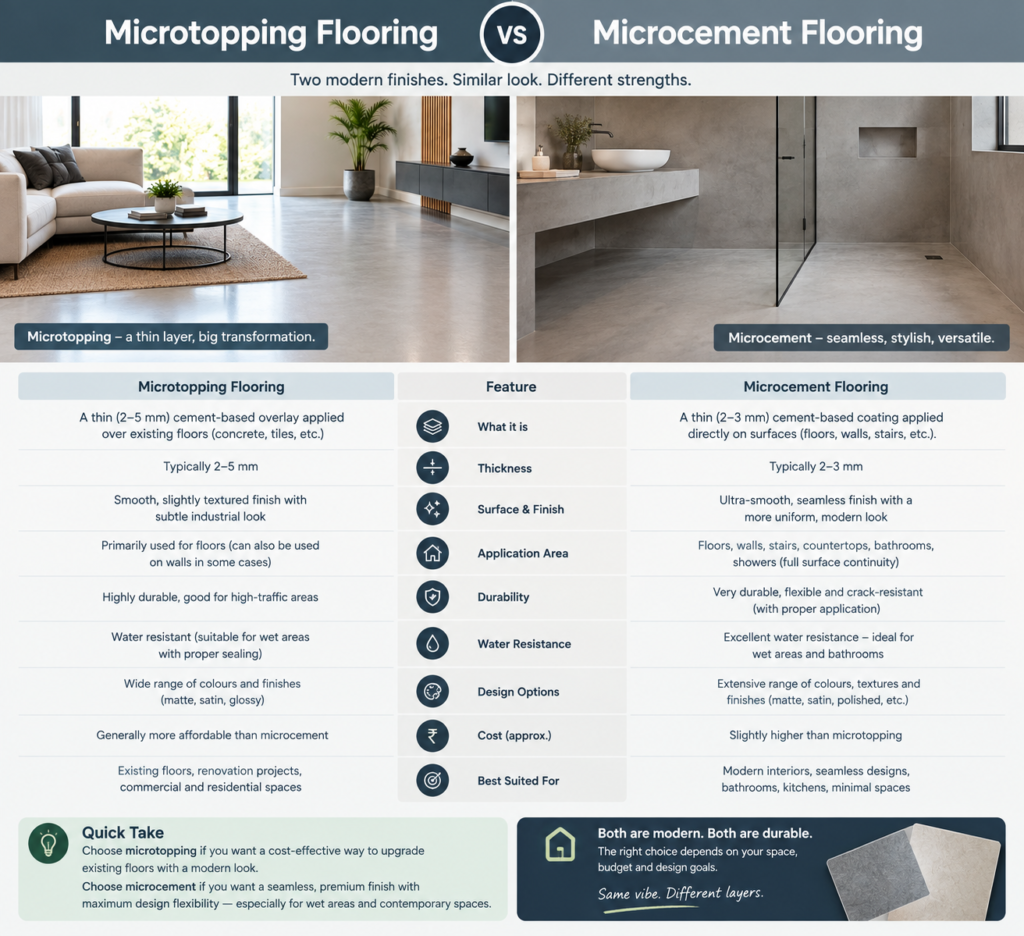
Table of Contents
Microtopping vs Microcement Flooring — Key Differences Explained
When comparing microtopping vs microcement flooring for your Delhi home or commercial space, understanding the key differences is essential to making the right choice.
If you are planning a flooring renovation in Delhi or Haryana, you have probably come across two very similar sounding options — microtopping and microcement flooring. Both are seamless, cement-based surface solutions that can be applied over existing floors — but they are not the same thing. At Acme Surface, we get asked about microtopping vs microcement flooring every single day — so we decided to write this definitive comparison guide to help you choose the right one for your space.
What is Microtopping Flooring?
Microtopping is an ultra-thin, high-performance surface overlay applied in just 2-3mm over existing floors. It is designed specifically for renovation projects where minimal height gain is critical — such as when doors need to clear the floor or when a very thin, refined finish is required. Microtopping delivers a smooth, contemporary aesthetic with excellent abrasion resistance — ideal for modern homes, cafes, showrooms, and offices across Delhi NCR.
What is Microcement Flooring?
Microcement is a cement-based decorative coating applied in slightly thicker layers of 3-5mm over existing surfaces. It offers a wider range of textures and finishes — from ultra-smooth and polished to slightly textured and organic. Microcement is known for its versatility, durability, and ability to deliver a seamless, luxury finish across a wide range of residential and commercial spaces in Delhi and Haryana.
Microtopping vs Microcement — Side by Side Comparison
1. Thickness
Microtopping: Ultra-thin — applied in just 2-3mm. Virtually no change in floor height — ideal for renovations where door clearance or step heights are a concern.
Microcement: Slightly thicker — applied in 3-5mm layers. Still much thinner than traditional flooring but adds marginally more height than microtopping.
2. Texture & Appearance
Microtopping: Delivers a very smooth, refined, and contemporary finish. The surface is sleek and uniform — perfect for minimalist, modern interiors.
Microcement: Available in a wider range of textures — from ultra-smooth and polished to slightly textured and organic. More versatile in terms of aesthetic options.
3. Best Applications
Microtopping: Ideal for renovation projects requiring minimal height gain — living rooms, bedrooms, bathrooms, cafes, showrooms, and offices where a very refined finish is desired.
Microcement: Ideal for both renovation and new construction projects — living rooms, bedrooms, bathrooms, kitchens, offices, restaurants, and commercial spaces across Delhi and Haryana.
4. Cost
Both microtopping and microcement start at similar price points — ₹180 per sq ft at Acme Surface. The cost difference between the two is minimal — the choice should be based on project requirements and aesthetic preference rather than price.
5. Durability
Microtopping: Highly durable with proper sealing — lasting 8-12 years with minimal maintenance.
Microcement: Slightly more durable due to its thicker application — lasting 10-15 years with proper care and maintenance.
6. Water Resistance
Both microtopping and microcement are water resistant when properly sealed with high-grade PU sealers — making both suitable for bathrooms, kitchens, and wet areas across Delhi and Haryana.
7. Installation Time
Microtopping: Typically takes 4-6 days for a standard residential project in Delhi.
Microcement: Typically takes 5-7 days for a standard residential project — slightly longer due to the additional layers.
Microtopping vs Microcement — Which One Should You Choose?
- Choose Microtopping if: You need minimal height gain, have door clearance concerns, or want an ultra-refined, sleek finish for a renovation project in Delhi or Haryana.
- Choose Microcement if: You want more texture options, greater durability, or are working on a new construction project where height gain is not a concern.
- Not sure? Contact Acme Surface for a free consultation — our experts will visit your site and recommend the best solution for your specific space and requirements.
Our Recent Projects in Delhi & Haryana
Microtopping Project — Modern Cafe, Delhi NCR
Acme Surface installed premium microtopping flooring at a modern cafe in Delhi NCR — creating a sleek, refined finish that perfectly complements the contemporary interior design. The ultra-thin application meant zero disruption to the existing floor height.
Microcement Project — Jade by Ashima, New Delhi
Acme Surface installed premium microcement flooring at Jade by Ashima — a renowned fashion destination in New Delhi. The smooth, minimalist finish creates a cohesive backdrop that lets the fashion take center stage.
Frequently Asked Questions
Is microtopping the same as microcement?
No — they are similar but different. Microtopping is ultra-thin at 2-3mm and designed primarily for renovations with minimal height gain. Microcement is slightly thicker at 3-5mm and offers more texture options. Both are seamless and applied over existing surfaces.
Which is cheaper — microtopping or microcement?
Both start at ₹180 per sq ft at Acme Surface. The cost is similar — choose based on your project requirements, not price.
Can both be used in bathrooms in Delhi?
Yes. Both microtopping and microcement are water resistant when properly sealed — making both ideal for bathrooms and wet areas across Delhi and Haryana.
We also offer premium Microtopping Flooring and Microcement Flooring across Delhi and Haryana.
Contact Acme Surface for Free Consultation
Still confused between microtopping and microcement flooring? Contact Acme Surface today for a free site visit and expert recommendation across Delhi, Gurugram, Faridabad, Noida, and all areas of Haryana.
📞 Call us: +91 99995 67606
💬 WhatsApp: +91 99995 67606
🌐 Website: acmesurface.com